Supply Chain Risk Management: How to Turn Your Business’ Weak Points into Market Advantage
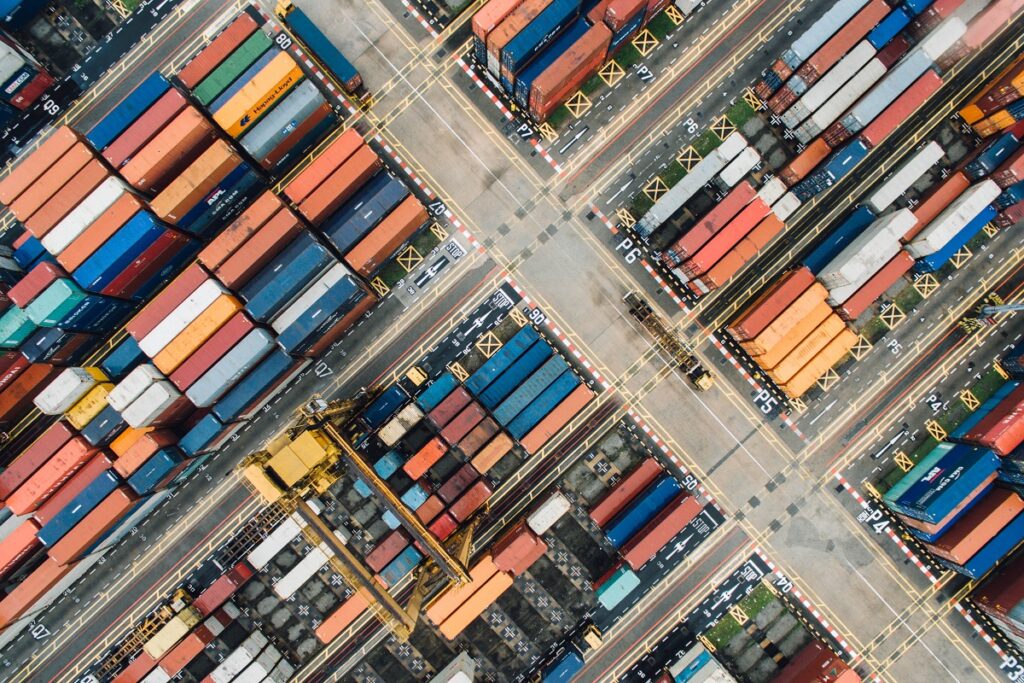
The global economy thrives on connection. Every order placed in London, Shenzhen, or San Francisco sets off a silent chain reaction of production, logistics, and finance across continents. This intertwined web of suppliers and partners forms the invisible backbone of commerce-the supply chain.
But as recent years have proven, that same interconnection makes the system fragile. One blocked canal, one trade restriction, one cyberattack, or one pandemic wave can grind global trade to a halt. In this volatile environment, supply chain risk management (SCRM) has appeared in a form that constantly evolves, learning from these events, and becoming a necessity. A strategic one as well. Modern companies are no longer asking, “Can we avoid disruption?” but “How fast can we recover when it happens?”
The Fragility Behind Efficiency
For decades, the golden rule of supply chains was efficiency. Global enterprises trimmed every unnecessary cost and delay, embracing just-in-time inventory and zero-waste logistics. The result was stunning efficiency-until it broke.
When COVID-19 began reshaping global trade, companies discovered the hidden cost of their streamlined perfection. A single missing component from Southeast Asia could freeze production lines in Europe. The semiconductor crisis paralyzed entire industries, from carmakers to consumer electronics. Even the world’s largest organizations, with decades of experience and deep pockets, found themselves exposed.
This was a humbling lesson: efficiency alone doesn’t guarantee stability. It can, paradoxically, make systems brittle. Supply chain managers began to realize that resilience is not inefficiency, but the price of survival. A slightly higher inventory cost or a diversified supplier base may appear expensive-until it saves an entire supply network from collapse.
Companies that once sought “optimization” now seek “optionality” – the ability to pivot quickly when circumstances change. In the post-pandemic economy, flexibility has quietly replaced cost-cutting as the ultimate metric of competence.
Understanding Risk Beyond the Obvious
Supply chain risks are not always visible, and their true power lies in their interdependence. A raw material shortage in one region can trigger a pricing surge elsewhere, while a sudden regulation in another may instantly devalue entire contracts.
Let’s break it down into distinct risk categories:
- Operational risks – Machinery failures, transport disruptions, or supplier insolvency. These are the daily threats most companies expect yet still underestimate.
- Geopolitical risks – Tariffs, trade wars, or shifting alliances. The U.S.–China trade tensions, for example, forced many companies to rethink sourcing regions altogether.
- Environmental and ethical risks – Floods, resource shortages, or sustainability scandals. Today, ESG compliance isn’t just branding; it affects access to financing and partnerships.
- Financial risks – Liquidity crunches, credit defaults, and currency volatility. In a world where suppliers are often small and cash-dependent, delayed payments can cripple production.
The challenge isn’t just identifying these risks but recognizing how they interact. When Russia’s invasion of Ukraine disrupted energy routes, for instance, it didn’t just affect gas prices – it raised manufacturing costs, transport fees, and even the procurement of essential materials like nickel and palladium. One event, multiple consequences.
The best-performing organizations have started investing in risk mapping. They trace not only their first-tier suppliers but also the subcontractors behind them – forming a digital twin of their supply network. This transparency allows them to simulate disruptions and plan responses before they happen.
Resilience, in this sense, is not built overnight. It’s slowly engineered through awareness, and with the help of data and a little bit of foresight.
Technology as the New Safety Net
Digital tools have transformed risk management into a science of anticipation. Artificial intelligence, machine learning, and predictive analytics are rewriting how companies interpret risk signals.
Imagine a system that alerts a manufacturer that a supplier’s delivery speed has quietly dropped over three months – a red flag for liquidity or labor issues. Or algorithms detecting sentiment shifts around a logistics provider, warning of potential protests or strikes. This kind of digital foresight is already being used by leaders in automotive, apparel, and pharmaceuticals.
- AI and analytics anticipate disruptions before they become crises.
- Blockchain and smart contracts enhance traceability and trust, ensuring every stakeholder sees the same immutable data.
- Internet of Things (IoT) devices monitor container conditions, routes, and delays in real time.
For instance, Maersk and IBM’s blockchain collaboration showed how transparency reduces disputes and fraud in global shipping. Likewise, companies in food and pharma now trace every ingredient back to its source – reducing compliance risk and improving brand trust.
But technology alone isn’t a panacea. It must work in tandem with well-defined governance, collaboration, and human judgment. Risk management still requires intuition – knowing when the data says “OK,” but experience whispers, “Not quite.”
Financial Resilience: The Hidden Backbone of Risk Management
Among all types of risks, financial resilience often receives the least public attention despite its importance. Cash flow disruptions can silently dismantle supply chains faster than any physical breakdown.
Suppliers, especially smaller ones, often operate on razor-thin margins and rely on timely payments to stay solvent. Delays in receivables or shrinking credit availability can push them into crisis, triggering cascading effects down the supply chain. In this sense, financial liquidity is a structural risk factor – and addressing it is an essential part of holistic SCRM.
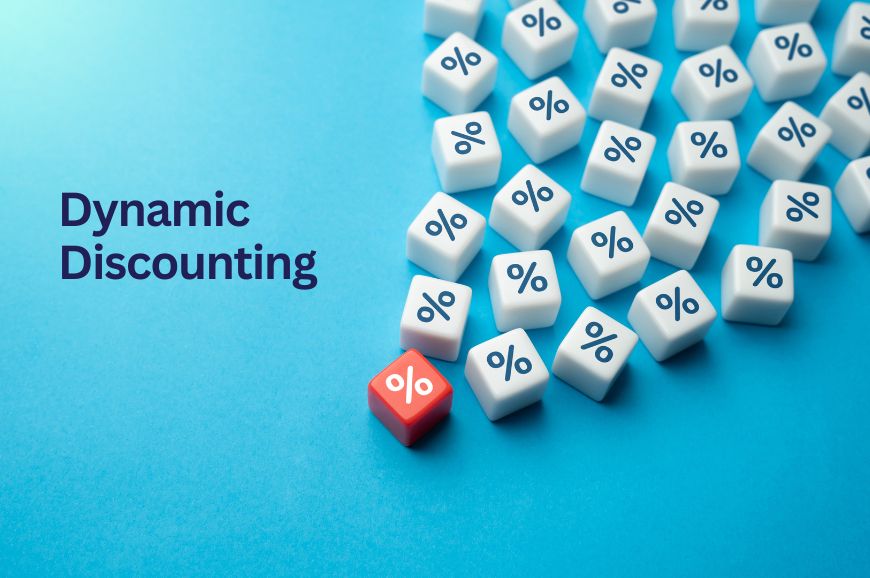
Supply chain finance (SCF) has emerged as a strategic tool to strengthen this weak link. Through mechanisms such as dynamic discounting, reverse factoring, or pre-shipment financing, SCF enables suppliers to access early payments while buyers maintain liquidity flexibility.
At Liquiditas, this principle takes shape through solutions that embed financial continuity into supply chains – helping companies not only manage disruptions but also empower their partners. By providing tailored SCF platforms, Liquiditas ensures that the flow of goods is matched by the steady flow of cash, making resilience both operational and financial.
The beauty of this approach is subtle but profound: it turns finance from a reactive emergency measure into a proactive stabilizer. When money moves smoothly, so does trust.
Seeing Credit Risk as a Supply Chain Signal
Supply chains don’t break only when cargo gets stuck at a port or when a factory goes offline. They also fracture quietly, on balance sheets and in cash-flow statements, long before a missed delivery appears in an ERP dashboard. Credit risk is often the first invisible tremor before an operational earthquake.
Companies that take this seriously treat the financial health of their suppliers as a core part of supply chain risk management, not as a separate concern parked in the finance department. They start with structured insight: credit reports, ratings, and trade data that paint a clearer picture of who they are really relying on. Instead of choosing partners on price and capacity alone, they ask a more fundamental question: Can this supplier stay in the game when conditions turn?
The most advanced players go beyond simple scores. They combine hard numbers with broader due diligence – ownership structures, exposure to specific markets, regulatory track records, and even reputation risk. A supplier with strong margins but weak governance might be as fragile as one with a stretched balance sheet. By layering financial analysis with operational and ethical criteria, companies move from a one-dimensional view of risk to a three-dimensional one.
Crucially, this isn’t a one-off exercise during onboarding. The financial health of a supplier is dynamic; it can deteriorate quickly under pressure from interest rate hikes, political shifts, or a single lost customer. That is why more organizations are embracing continuous monitoring – real-time alerts on late payments, credit downgrades, or legal events that signal distress before it becomes a crisis. Some integrate these feeds directly into procurement or ERP systems, turning credit data into an early-warning radar rather than a dusty PDF in someone’s inbox.
Technology quietly amplifies all of this. AI-driven models can now sift through financial filings, trade flows, and macroeconomic trends to flag which partners are most exposed to upcoming shocks. For global giants, that means refining complex portfolios; for smaller businesses, it levels the playing field, offering access to risk tools that were once reserved for multinationals. What emerges is a new discipline: treating credit signals not as a bureaucratic hurdle, but as a live map of where the supply chain may bend – and where it might break.
When you see credit risk this way, it stops being a back-office formality and becomes something else: a strategic lens on resilience. Companies that learn to read those signals early don’t just avoid bad surprises; they gain time – to renegotiate, to diversify, to support a key supplier, or to redesign a part of the chain before it fails. In an era where days of delay can translate into months of recovery, that time is perhaps the most valuable asset of all.
Building a Culture of Anticipation
The best organizations know that resilience is as much cultural as it is technical. Risk management cannot live in a single department; it must permeate decision-making across procurement, logistics, finance, and leadership.
A resilient culture is built on three capabilities:
- Transparency – Sharing data across teams and partners, dismantling silos.
- Scenario thinking – Constantly asking “what if?” and rehearsing crisis responses.
- Empowerment – Allowing teams at every level to act fast when disruptions hit.
Take Toyota, for example. After the devastating 2011 Tōhoku earthquake, the company built an extensive supplier database covering several tiers deep. This digital mapping now allows Toyota to detect and respond to disruptions anywhere in its global network within days. Similarly, Unilever and Nestlé have invested heavily in digital twins – virtual models of their supply chains that simulate risks and test mitigation strategies.
But culture also means mindset. The old reflex was to hide disruption to avoid reputational harm. Now, transparency is seen as professionalism – a signal to partners and investors that a company understands its vulnerabilities and has plans to manage them. Leaders who communicate risks openly, and who treat suppliers as collaborators rather than contractors, create ecosystems that respond faster and break less.
From Risk Management to Risk Intelligence
Tomorrow’s supply chains won’t merely withstand risk – they’ll interpret it. The goal is shifting from reaction to intelligence.
With the integration of AI, supply networks can learn patterns, assign probabilities to disruptions, and recommend dynamic adaptations. This means not just responding to a port closure but automatically rerouting shipments, adjusting production forecasts, and even recalibrating payment schedules.
Forward-thinking companies are already exploring “autonomous supply chains” – systems capable of making micro-decisions without human intervention. For instance, predictive models that adjust order volumes before market demand shifts or reroute shipping lanes based on weather forecasts.
This isn’t about surrendering control to algorithms but about expanding the range of what’s manageable. The more we automate risk response, the more time humans have to focus on strategy, innovation, and customer value.
Ultimately, risk intelligence is the next frontier-the ability not just to survive shocks but to learn from them faster than competitors. That learning curve will define the winners of the next decade.
Risk as a Catalyst for Strength
So, when we have a world where volatility is constant, supply chain risk management needs to become something of an innovative engine that will not only work as a defensive strategy, but it will also help the company’s way through the markets’ rough waters
Every disruption carries a lesson. Companies that build visibility, adaptability, and financial agility into their networks don’t merely protect what they have; they position themselves to capture opportunities that others miss. Durable supply chains are not static structures-they’re dynamic systems that evolve with every challenge.
The future belongs to organizations that see risk not as an enemy to fear, but as a compass that points toward progress. Strength, after all, is not the absence of failure – it’s the ability to rebound stronger, smarter, and sooner.

A senior risk & compliance professional with over 15years of solid banking experience in highly dynamic environments. Focused on delivering risk strategies to enable growth in a sustainable manner. Views expressed on this page are purely personal and shall not be construed as being representative of my employer/s or anyone associated.