Where Working Capital Is Heading in 2026
1. A Forum That Exposed a Shift Already in Motion
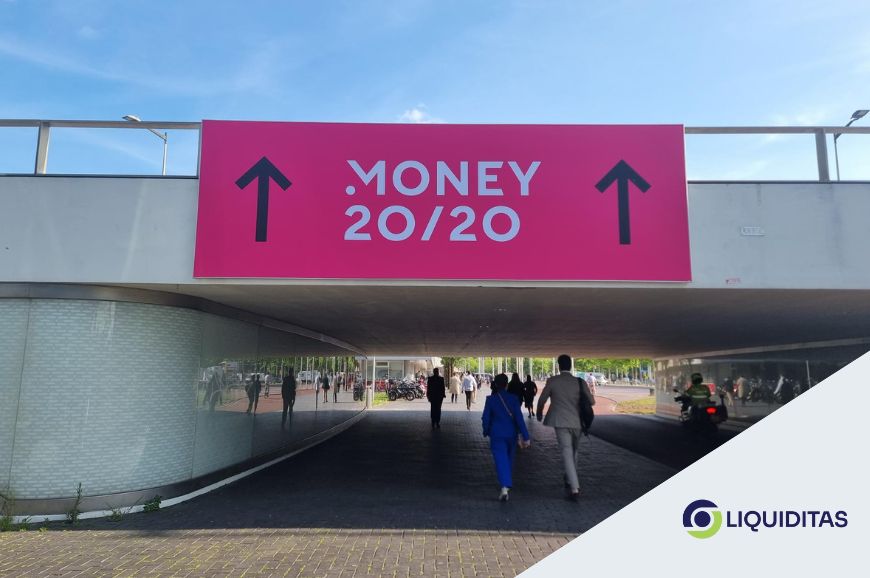
This year, The Working Capital Forum in Amsterdam offered its usual calm, but inside the conference, the air carried a different tension – the kind that comes when people realise change is already underway. As speakers shared their experiences, a quiet truth began to settle: liquidity no longer forms inside a single department. It lives in the spaces between them, shaped by choices made in procurement, supply chain, finance, and operations, often without recognising how tightly they are connected.
The conversations drifted away from old routines. What once worked now feels too small. Companies are starting to examine not just their numbers, but the pathways those numbers travel – how cash is seen, how it’s moved, and how decisions ripple far beyond the teams that make them.
2. Liquidity in a Volatile World
The economic backdrop threaded through nearly every panel. Inflation that refuses to flatten, supply networks shifting under geopolitical pressure, and a cost environment that punishes slow reactions – the volatility is structural now, not circumstantial.
Speakers talked about how unpredictable environments expose weaknesses: outdated policy cycles, fragmented responsibilities, and forecasting models that rely on hope more than clarity. Companies can no longer afford to treat volatility as an exception. It is the rhythm they must plan around.
Working capital strategies are changing accordingly. Liquidity buffers are becoming more deliberate. Forecasting is being pushed closer to real-time. And treasurers are leaning on procurement, supply chain, and FP&A not as support functions, but as equal partners in resilience.
3. The Visibility Problem No One Can Ignore
If there was a pressure point every corporate could agree on, it was visibility – not the conceptual kind, but the operational kind that depends on data flowing seamlessly between systems that were never designed to align.
Stories repeated themselves across industries. ERPs that don’t communicate. Cash data that lags behind reality. Supplier onboarding that takes weeks instead of days. Forecasts that rely on disconnected spreadsheets because teams cannot extract a unified truth from their systems.
The message became almost predictable: without integrated data, liquidity becomes reactive. And when liquidity is reactive, everything else is downstream of uncertainty.
4. Working Capital Is Becoming a Cross-Functional Discipline
This was the most visible evolution at WCFE25. Companies are redesigning working capital ownership. Procurement is influencing financial stability through supplier management. FP&A is translating operational shifts into cash implications. Supply-chain teams are evaluating inventory not just as stock, but as tied liquidity. Treasury is depending on the visibility these teams generate to support strategic decisions.
A few companies have even introduced dedicated Heads of Working Capital – a role that blends governance, cross-department alignment, and cash culture into a single mandate. The idea would have been unconventional a few years ago; now it feels inevitable.
5. Platform Integration Creates Efficiency, Not Magic
ERP-connected finance tools generated interest, but the conversations stayed grounded. Embedding SCF tools within operational systems reduces friction, accelerates supplier inclusion, and improves data quality – but it does not erase the complexity of execution.
Speakers were clear: embedded tools work only when cross-functional alignment exists. Onboarding still demands clarity. Compliance workflows still matter. Multiple funding partners still require coordination. Technology can carry the weight, but it cannot replace structure.
6. Supplier Adoption: The Quiet Barrier
Many SCF programs stall not because the strategy is flawed, but because supplier participation never reaches meaningful scale. Companies at WCFE25 spoke openly about slow onboarding, inconsistent communication, and supplier hesitation rooted in unclear value.
Some corporates shared cases of success – predictable onboarding flows, transparent explanations of benefits, and dedicated communication models. These examples stood out precisely because they are rare. Supplier friction remains the blind spot that slows even the most advanced programs.
7. AI Forecasting Is Moving From Novelty to Infrastructure
Even in a conference full of competing priorities, AI forecasting felt like the chapter everyone agreed was already underway. Manual forecasting simply cannot match the speed or variability of today’s markets.
The most compelling discussions centered around predictive liquidity models, behavioural analysis for receivables and payables, automated ERP data ingestion, and instant scenario modelling. Companies don’t view this as innovation anymore. They view it as the minimum requirement for a modern treasury.
The subtext was striking: without AI-supported forecasting, a business can see the present – but never the future.
8. A New Standard for Liquidity Leadership
Perhaps the most revealing comparison came from private equity speakers. Their expectation for disciplined working capital routines – strict governance, fast cycles, sharper execution – is already influencing corporates. It’s not about extracting liquidity aggressively; it’s about eliminating inefficiency with discipline and speed.
Across WCFE25, the message converged: visibility shapes behaviour, and behaviour shapes resilience. When teams can see cash clearly, decisions become coordinated instead of isolated. Working capital transforms from an annual project into a weekly practice.
This is the real future the forum pointed toward – a world where liquidity isn’t managed by one department, but shaped by the collective rhythm of the entire organisation.
9. Cash Culture: From KPI to Daily Behaviour
One of the quieter but most important undercurrents at WCFE25 was the idea of cash culture. Not as a slogan, but as a practical rhythm inside the organisation. The strongest case studies all started from the same foundation: people across departments understood how their everyday decisions shaped liquidity. Payment terms were not negotiated in isolation. Inventory levels were not adjusted without considering their cash impact. Sales incentives were not designed without an eye on collections and risk.
When companies brought working capital into weekly operational routines, something shifted. Conversations changed from “Did we hit the number?” to “What created the number?” Teams began to see that liquidity was not an outcome decided at quarter-end, but the cumulative effect of hundreds of choices made across purchasing, production, logistics, and finance. In that environment, dashboards and forecasts stopped being reports and started becoming feedback loops. The companies that stood out at WCFE25 were not simply better at measuring working capital; they were better at teaching it.
10. What This Means for the Next Generation of Working Capital Programs
If there was a single message that threaded through all the discussions, it was that the next phase of working capital will be built on integration rather than improvisation. Integration of data, so that treasurers, procurement, and supply-chain teams finally work from the same reality. Integration of governance, so that responsibilities are shared instead of pushed from one function to another. And integration of tools, so that SCF platforms, ERP systems and AI forecasting engines reinforce each other instead of operating as separate projects.
In that context, supply chain finance takes on a different meaning. It is no longer just a way to free up cash on invoices, but a structural element in how companies design resilience. Programs that are simple to join, transparent, and tightly connected to ERP data can turn early payment from a tactical lever into a standing capability. The companies that left Amsterdam with the clearest sense of direction were those that saw working capital not as a single initiative to be optimised, but as an ecosystem to be continuously refined – where technology, culture, and cross-functional discipline all move in the same direction.

Executive leader with more than 20 years of international experience across finance, operations, and general management. I currently lead the finance and operational functions at Hut4 Capital, an investment group active across several technology and financial services businesses. My work focuses on corporate finance strategy, liquidity and capital management, financial governance, and supporting the growth and structuring of portfolio companies.