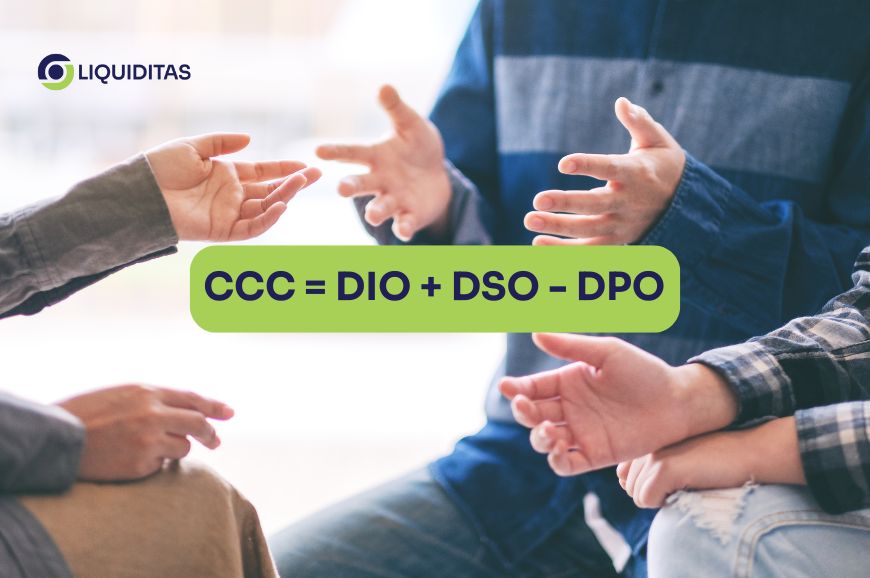
Why [CCC = DIO + DSO – DPO] Should Drive Your Decisions
The Cash Conversion Cycle (CCC) isn’t just another financial metric – it’s the heartbeat of your company’s operational efficiency. For CFOs, it represents the critical link between capital allocation and revenue generation, measuring how quickly every invested dollar returns to your coffers.
Optimising the CCC unlocks working capital, reduces financing costs, and fuels growth. But traditional tactics – stretching payables, pressuring receivables, or slashing inventory – often backfire, damaging supplier relationships, customer trust, or operational resilience.
The real question isn’t whether to improve your CCC, but how to do it without creating new problems. This is where innovative solutions like Supply Chain Finance (SCF) and platforms like Liquiditas redefine the game.
The Anatomy of the Cash Conversion Cycle
At its core, the CCC formula is simple: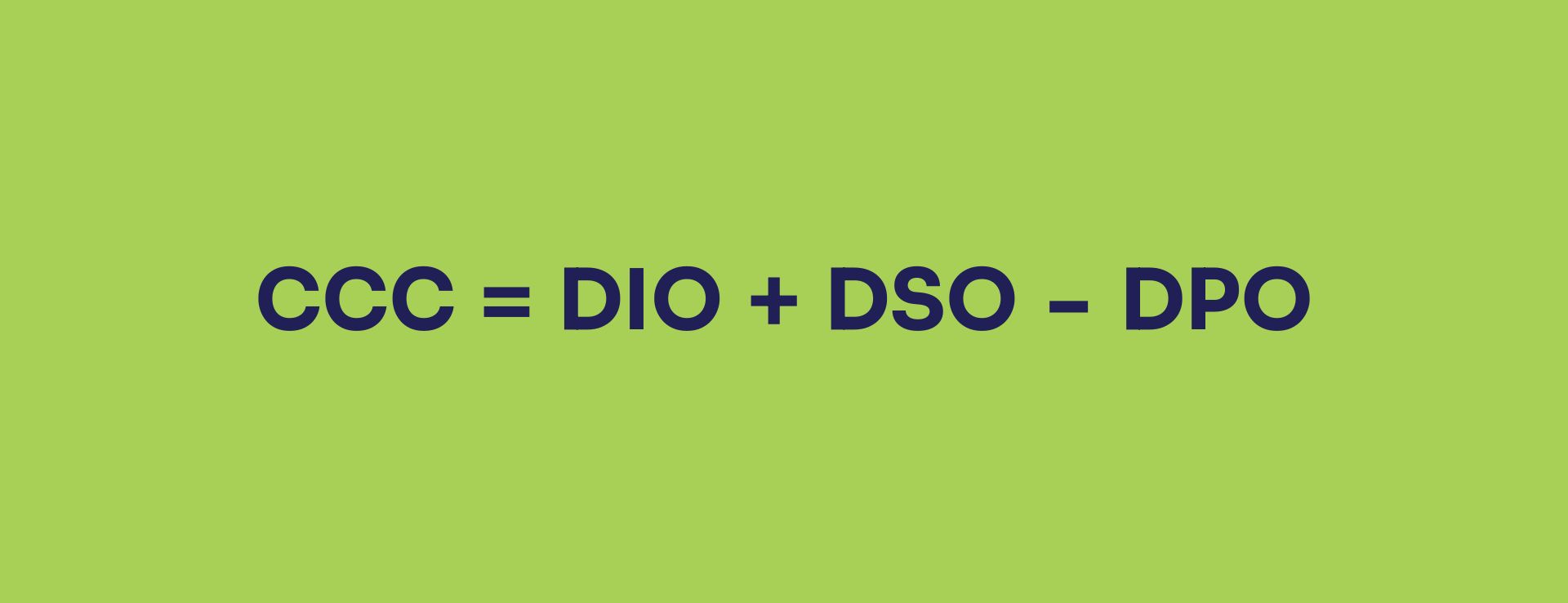
But each component tells a deeper story:
- Days Inventory Outstanding (DIO): How long capital sits idle in stock.
- Days Sales Outstanding (DSO): How long customers take to pay.
- Days Payables Outstanding (DPO): How long you defer payments to suppliers.
A shorter cycle means faster cash turnover and stronger liquidity. Yet brute-force optimisation – like unilaterally extending DPO or aggressively cutting DIO – risks collateral damage.
The Trade-Offs of Traditional CCC Tactics
Most CFOs rely on three levers to improve CCC, each with hidden costs:
| Lever | Benefit | Trade-Off |
| Extend DPO | Hold cash longer | Supplier strain & supply risk |
| Reduce DSO | Accelerate cash inflows | Customer friction |
| Cut DIO | Free up working capital | Stockouts & lost sales |
These approaches often pit departments against each other: Procurement fights to preserve supplier terms, Sales resists stricter payment policies, and Operations balks at leaner inventories.
A Smarter Approach: How Supply Chain Finance Balances the Equation
Supply Chain Finance (SCF) flips the script. Instead of squeezing suppliers or customers, it aligns incentives across the ecosystem:
- You extend payment terms (DPO↑) – improving your working capital.
- Suppliers get paid early – often at lower financing costs than they’d face alone.
- Third-party funders bridge the gap – without impacting your balance sheet.
Result: A shorter CCC without the collateral damage.
Why Liquiditas? The Modern CFO’s CCC Partner
Traditional SCF programs are plagued by complexity, slow onboarding, and manual processes. Liquiditas cuts through the friction with implementation aligned to your existing ERP and approval process — no upfront technology spend.
“We built Liquiditas for finance teams who refuse to choose between liquidity and relationships. It’s not about paying earlier or later – it’s about paying right.”
The CCC as a Strategic Advantage
Today’s CFOs are tasked with delivering both efficiency and resilience. With Liquiditas, you can:
- Shorten your CCC without alienating suppliers or customers.
- Turn working capital into a growth engine.
- Lead with agility in volatile markets.
Ready to optimise your cash conversion cycle – the smart way? Let’s talk.

Executive leader with more than 20 years of international experience across finance, operations, and general management. I currently lead the finance and operational functions at Hut4 Capital, an investment group active across several technology and financial services businesses. My work focuses on corporate finance strategy, liquidity and capital management, financial governance, and supporting the growth and structuring of portfolio companies.